
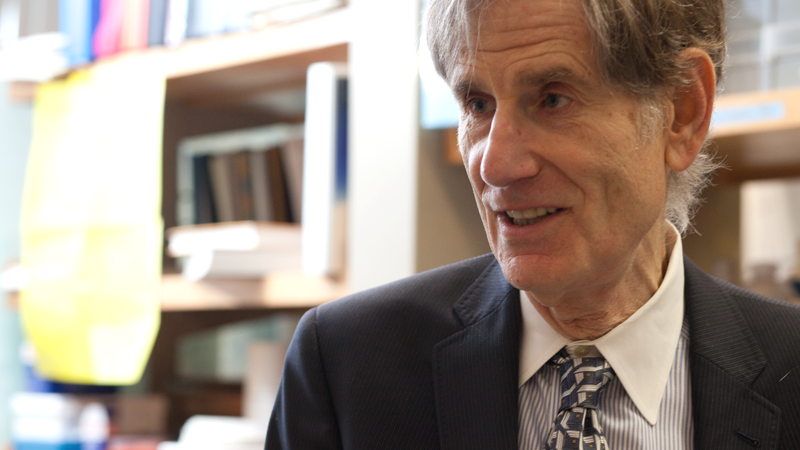
BS, University of Wisconsin, Madison, 1967
MD, University of Illinois, Chicago, 1971
Daniel K. Ludwig Professorship and Chairman, University of Chicago, 2001-present
I have devoted over 50 years to translational research in cancer, and, in collaboration with many of the best scientists in the field, I have contributed to paradigm-shifting biological discoveries and practice-changing clinical research, including:
• use of human genetic diseases to study defects in DNA repair,
• defining the role of potentially lethal radiation damage in human tumor cells,
• defining the role of a type of DNA repair in radiotherapy (RT),
• administering induction chemotherapy in the treatment of head and neck cancer,
• conceiving the theoretical structure and defining the biology of oligometastatic cancer,
• performing the first curative non-surgical clinical trial of oligometastatic cancer,
• identifying the cGAS-STING pathway as the critical molecular link connecting RT-induced DNA damage to the activation of dendritic cells and the production of Type I interferon (IFN),
• establishing that Type I IFN is required for RT efficacy,
• pioneering blockade of PD-L1 to increase local and abscopal effects of RT, and
• uncovering RT-induced mobilization of monocytes/MDSCs and an increase in recruitment of MDSCs into irradiated tumors.
These widely cited studies form the basis of many completed, ongoing, and planned clinical investigations combining ablative RT with immune checkpoint blockade (ICB), including:
• our first-in-human phase I study combining multisite stereotactic body radiotherapy (SBRT) with pembrolizumab/anti-PD-1 in patients with advanced solid tumors demonstrating safety and superior control of irradiated versus non-irradiated metastases, and
• our first randomized trial combining dual ICB (nivolumab/anti-PD-1 and ipilimumab/anti-CTLA-4) with multisite SBRT in treatment-naive stage IV NSCLC patients demonstrating concurrent therapy was non-inferior to sequential with zero dose-limiting toxicities.
Our recent analysis of patient biopsies of lung metastases from our clinical trials revealed that SBRT triggered robust induction of the EGFR ligand amphiregulin in tumor cells, reprogramming EGFR⁺ myeloid cells into an immunosuppressive, non-phagocytic state. This systemic signaling axis fueled outgrowth of distant, pre-existing metastases in patients and preclinical models. Importantly, our findings do not implicate RT in the creation or progression of new metastases, but rather we found it suppresses dissemination; suboptimal tumor ablation, however, can restructure the systemic microenvironment to awaken dormant disease. This study represents a breakthrough in our understanding of the biological effects of RT.
In studies focused specifically on T cells, we established that many intratumoral T cells survive clinically relevant radiation doses, remaining functional. T cells are also more radioresistant than circulating or lymphoid T cells, demonstrating intrinsic resistance of tumor- and tissue-resident T-cell populations to radiation. We recently reported the design and preclinical evaluation of the GA1 CAR, a universal, modular, and tunable CAR-T platform.
Other research areas include studies on effective nanomedicines delivered systemically, YTHDF1 and YTHDF2 in the context of immunotherapy and RT, and elucidating the mechanisms governing these effects, and the microbiome and its impact on response to treatment.
Over the course of my career, I have published 800+ peer-reviewed papers, and my research has been directly translated into the clinic: 1) radio-inducible viral gene therapy (TNFerade), 2) use of anti-VEGF antibodies (Avastin) with RT, 3) use of anti-PD-1 (Pembrolizumab) with RT, and 4) nanoscale metal-organic frameworks. I am a member of the National Academy of Medicine.
Ludwig Center at the University of Chicago
5758 South Maryland Avenue MC 9006
Chicago, Illinois, U.S. 60637
T 773 702 0817
F 773 834 7233