
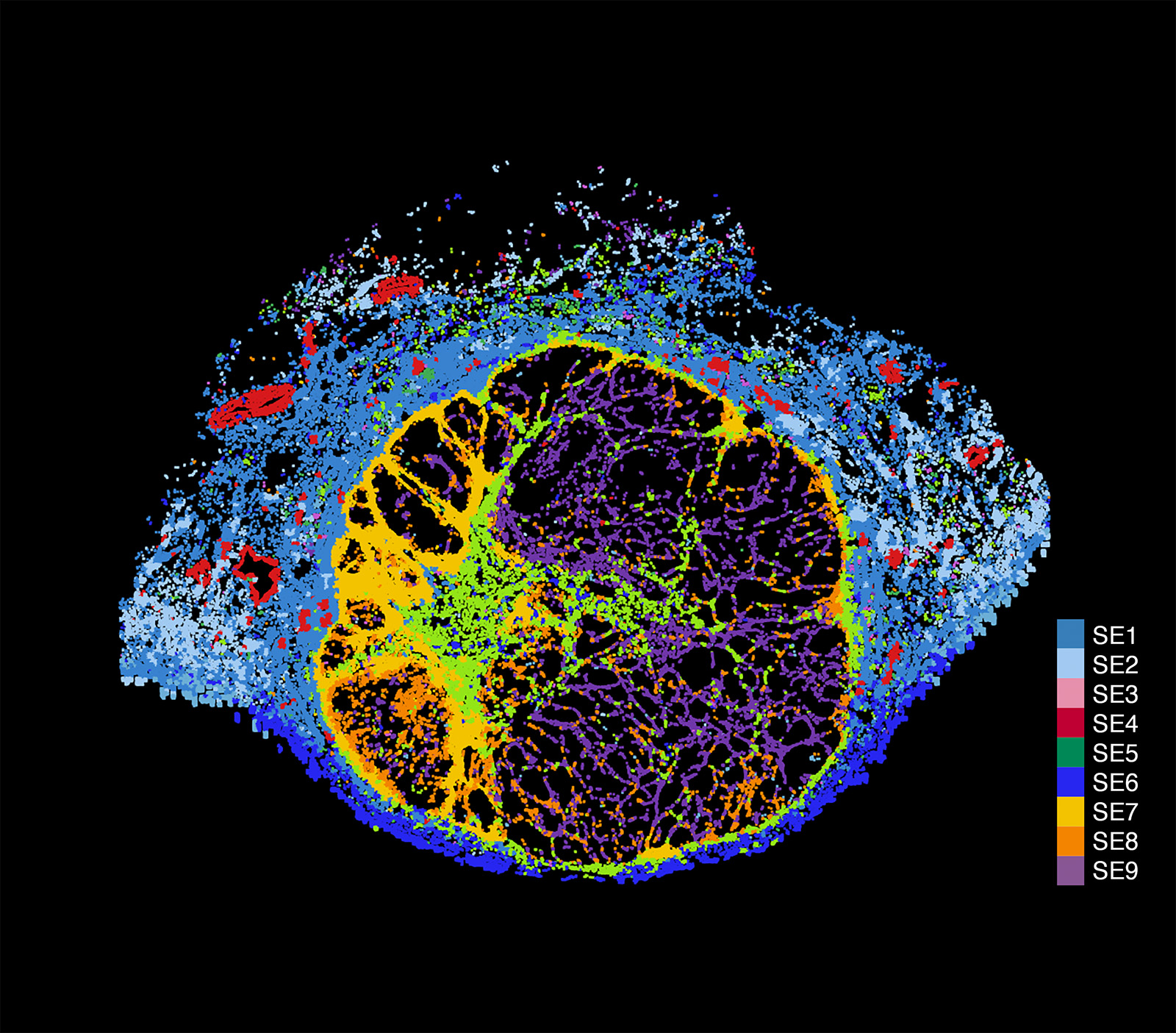
Tumors are topographically diverse ecosystems of cancerous and noncancerous cells, and their distinct biogeographies have a significant bearing on cancer progression and responses to therapy. Researchers led by Ludwig Stanford’s Aaron Newman and Aadel Chaudhuri of the Mayo Clinic reported in a May issue of Nature a machine-learning framework for multi-analyte profiling of spatial ecotypes (SEs), which describe spatially dependent cell states and multicellular ecosystems in the tumor microenvironment (TME). By integrating more than 10 million single-cell and spot-level spatial transcriptomes from ten human carcinomas and melanomas, the researchers identified nine widely conserved SEs, each having unique biological and spatial features and associations with clinical outcomes. Some of the SEs were correlated with distinct responses to immunotherapy. The locations and core characteristics of the SEs were also conserved across tumor types. Aaron and his colleagues then showed that these SEs can be identified from plasma cell-free DNA (cfDNA) using DNA methylation profiling and deep learning, developing a model for this purpose named Liquid EcoTyper. Using whole-genome cfDNA methylation profiles of nearly 100 patients with melanoma, the researchers found faithful concordance between plasma-derived SE levels, SE levels confirmed by tumor biopsy and known outcomes of checkpoint blockade immunotherapy. Their findings reveal fundamental units of TME organization and demonstrate a multimodal platform for profiling TMEs for risk stratification and the personalization of therapy.
Non-invasive profiling of the tumour microenvironment with spatial ecotypes
Nature, 2026 May 6