
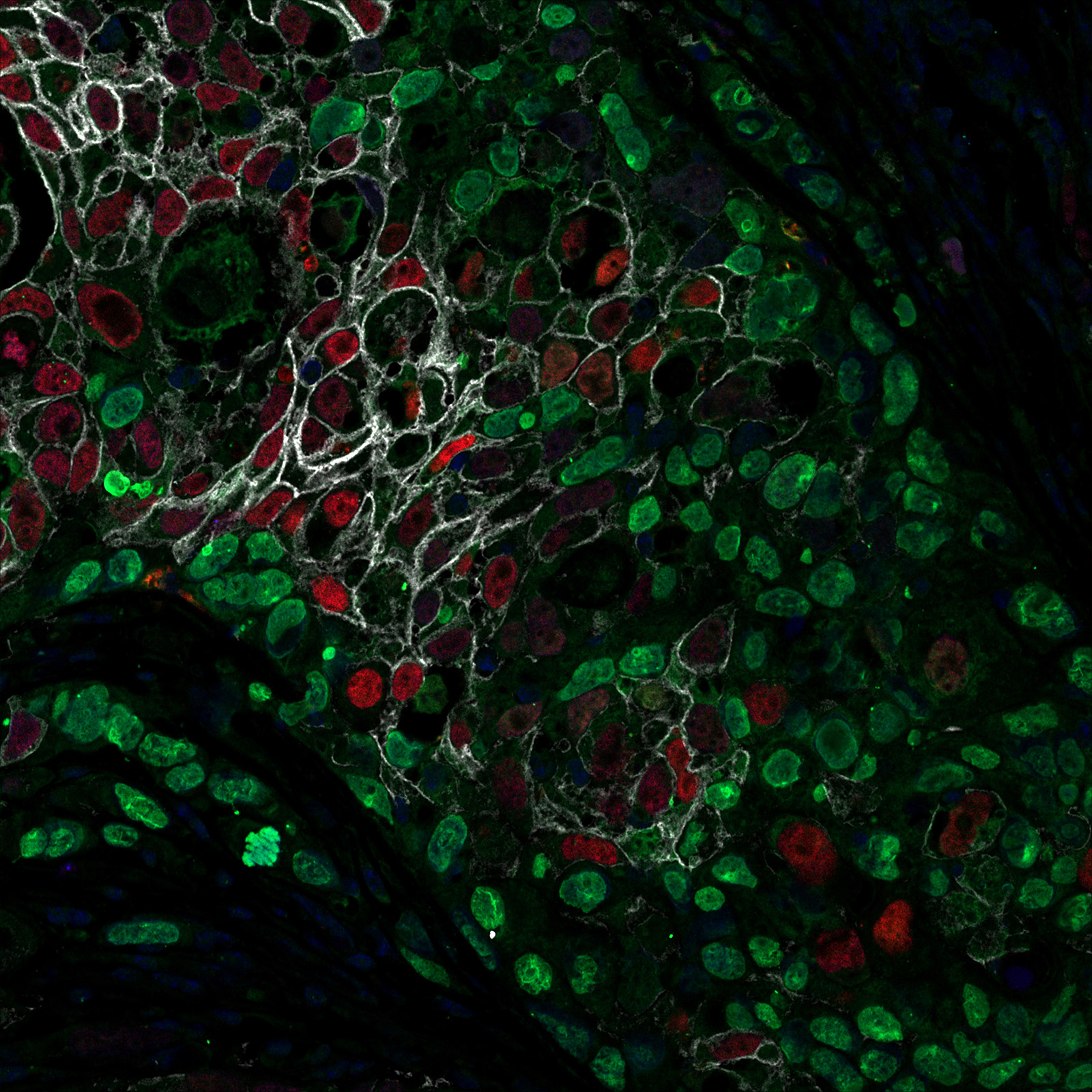


Antibody-drug conjugates (ADCs) that target HER2, like trastuzumab deruxtecan (T-DXd), are used to treat HER2-positive breast cancer. But HER2 heterogeneity in tumors can drive resistance to such therapies. Understanding why this is so has been hindered by the lack of preclinical models that faithfully mimic HER2 heterogeneous tumors. Researchers led by Ludwig Harvard’s Kornelia Polyak, including Center colleague Franziska Michor, reported in an April Cancer Discovery publication their development of human cell line models composed of ERBB2-amplified (HER2hi) and nonamplified (HER2lo) cell populations from the same tumor and the use of those models to examine the role of HER2 heterogeneity in tumor biology and drug resistance. Their studies uncovered cooperation between clonal sub-populations of HER2hi and HER2lo cells and showed that the latter drive resistance to HER2-targeting ADCs and subsequent disease recurrence but are themselves susceptible to HER2 kinase inhibitors. Employing CRISPR screens on co-cultures of HER2hi and HER2lo cells, the team showed that HER2lo cells can be sensitized to T-DXd by loss of ABCC1, a transporter that drives drug resistance in many cancers, and the deubiquitinating enzyme USP9X, which prevents the degradation of proteins. Inhibiting the latter, they show, sensitizes HER2lo cells to T-DXd by promoting HER2-degradation and release of the ADC payload. The findings suggest an approach to overcoming therapeutic resistance in HER2+ breast cancers and improving patient outcomes.
HER2 heterogeneous breast cancer models reveal novel therapeutic targets and subclonal dynamics during evolution to resistance to HER2-targeted therapies
Cancer Discovery, 2026 April 2