
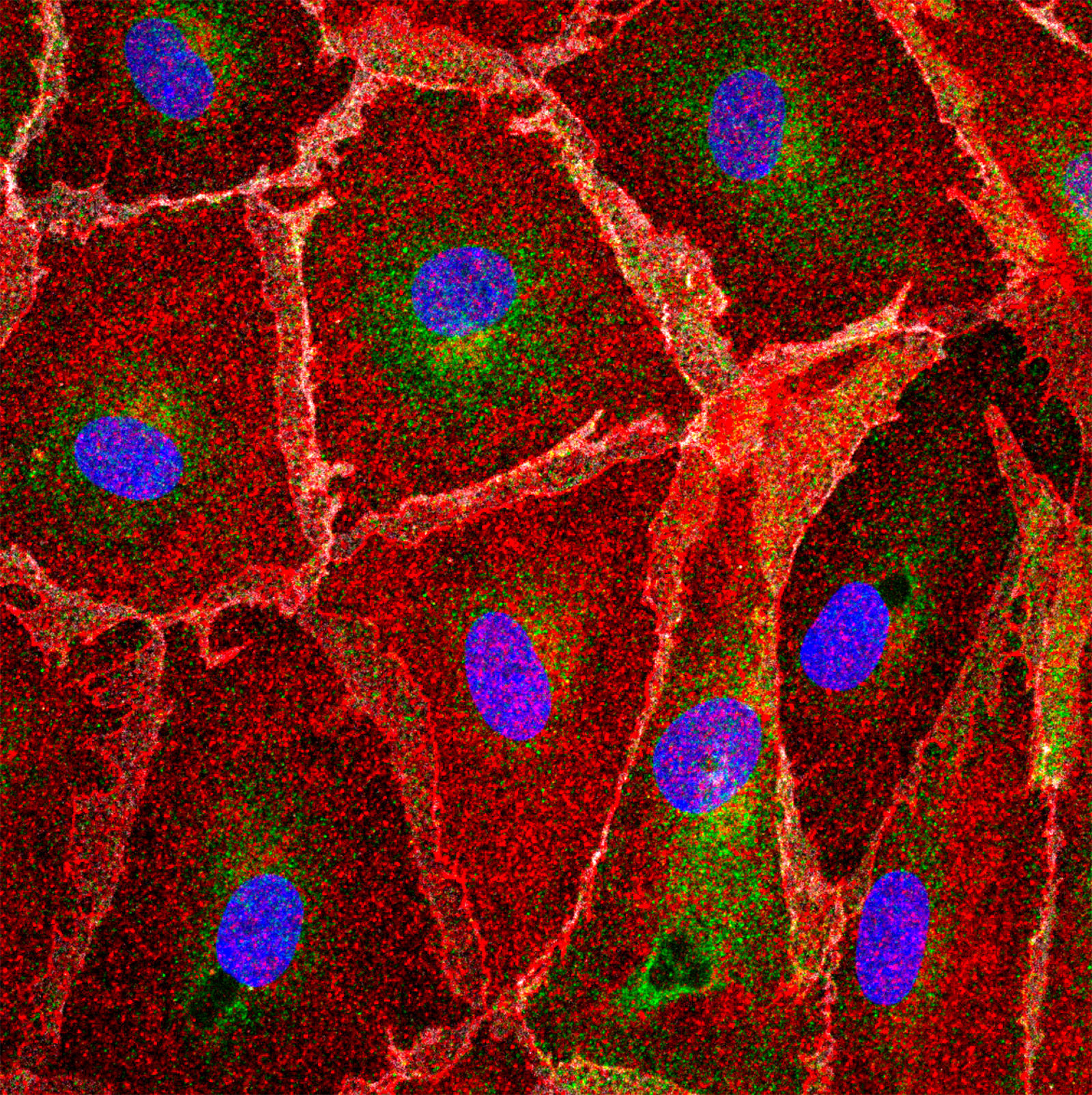



The endothelial cells that line blood vessels regulate the passage of nutrients from the blood into the body’s tissues. In a March issue of the Journal of Experimental Medicine, researchers led by Ludwig Lausanne’s Laureline Wetterwald, Anna Köck and Tatiana Petrova uncovered an unexpected, active role for the cells in maintaining metabolic health. The researchers discovered that a newly identified transmembrane phosphoglycoprotein expressed only in endothelial cells, MYCT1, is essential for white adipose tissue (WAT) expansion. In mouse models, deletion of Myct1 sufficed to limit energy storage in WAT, with the mice remaining much leaner than their normal counterparts even when fed a high-fat diet. Their studies revealed that MYCT1 regulates endolysosomal trafficking through its interaction with small transmembrane proteins IFITM2 and 3. Loss of MYCT1 leads to accumulation of IFITM2/3 in endosomes, driving enhanced endocytic uptake and the delivery of plasma protein cargo to lysosomes for degradation. This causes an intracellular nutrient overload that hyperactivates signaling by mTORC1—a molecular manager of cellular metabolism—leading to the futile use of energy in endothelial cells instead of its delivery to other tissues for storage in fat. The discovery assigns a new role to endothelial cells in regulating metabolism and energy storage. It also suggests a target for drugs that could disrupt the endothelial management of energy transfer to treat metabolic disease and cancer.
MYCT1–IFITM2/3 interaction links endothelial endolysosomal trafficking to white adipose tissue expansion
Journal of Experimental Medicine, 2026 March 25