
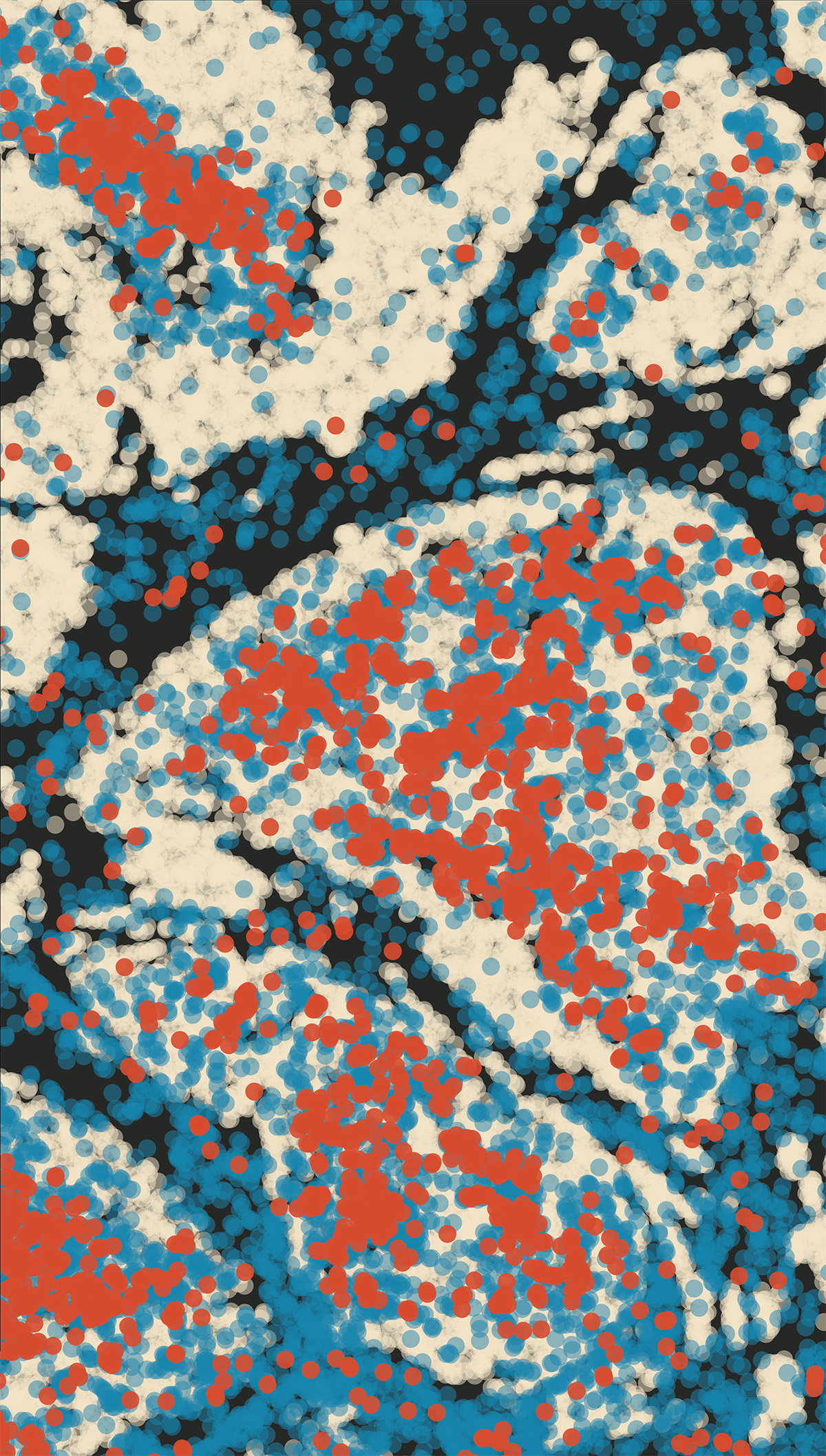
Though they’ve been linked to the growth of multiple cancers, neutrophils can assume multiple functional states, only some of which have that effect. Identifying those states has proved to be a challenge. Researchers led by Ludwig Lausanne’s Mikaël Pittet reported in a February publication in Cancer Cell a gene expression program in tumor-associated neutrophils (TANs) that uniformly supports cancer cell survival and tumor progression across human and murine tumors. The program pushes TANs into a terminal ‘aged’ state characterized by high CCL3 expression. These senescent, CCL3hi neutrophils preferentially occupy hypoxic niches in the tumor microenvironment (TME). Induced by hypoxia, CCL3 binds to its receptor CCR1 on the TANs themselves to drive senescence, activate gene expression programs that induce TAN adaptations to the TME and activate genes that promote tumor growth. The researchers showed that mice lacking CCL3 or CCR1 in their neutrophils failed to support tumor growth. They also identified TANs expressing this conserved genetic program as a key component of the TME linked to cancer progression, described a biomarker of prognosis for further evaluation and suggested signaling pathways that maintain CCL3hi TANs as potential targets for cancer therapy. These findings, together with Mikaël and colleagues’ 2023 Science study identifying the CXCL9-to-SPP1 macrophage polarity axis, establish neutrophil abundance and macrophage polarization as two independent, key TME variables that broadly influence cancer progression and patient outcomes.
CCL3 is produced by aged neutrophils across cancers and promotes tumor growth
Cancer Cell, 2026 February 5