
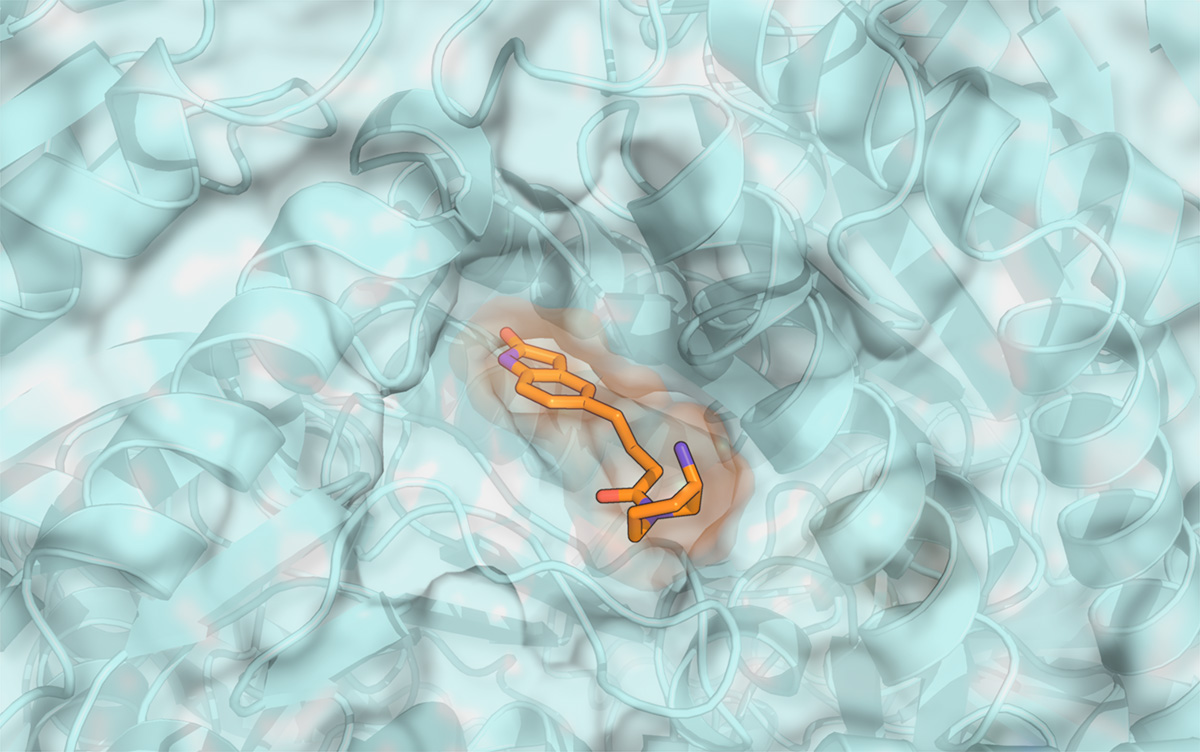


Researchers led by Ludwig Princeton’s Yibin Kang and Cao Fang detailed in a Nature Immunology paper in January how all-trans retinoic acid (atRA) produced by dendritic cells (DCs) alters them to induce tolerance of tumors. This tolerance diminishes the efficacy of DC vaccines—partly explaining why such immunotherapies have met with limited success. Retinoic acids (RA) are produced by a family of aldehyde dehydrogenase (ALDH1A) enzymes. ALDH1a3 is often overexpressed in human cancer cells, while ALDH1a2 is produced by certain immune cells. Cao, Yibin and colleagues found that under conditions commonly employed to produce DC vaccines, differentiating DCs begin expressing ALDH1a2, producing high levels of RA. The nuclear signaling pathway activated by RA suppresses the maturation of DCs, diminishing their ability to trigger anti-tumor immunity. RA also favors the development of macrophages that are less efficient than DCs in presenting tumor antigens for immune recognition, further undermining the efficacy of DC vaccines. The researchers also reported the design of a candidate drug that inhibits RA production by both cancer cells and DCs by targeting both ALDH1a2 and ALDH1a3. The compound, KyA33, not only boosted the efficacy of DC vaccines in preclinical studies but also holds promise as an independent cancer immunotherapy. This comes on the heels of a separate study led by Yibin and former graduate student Mark Esposito, reported in iScience last November, that described the rational design and preclinical development of drugs that inhibit retinoic acid production. For more than a century, efforts to develop viable drugs to block retinoid signaling have failed. The process of drug discovery developed in the latter study provided the blueprint for the design of KyA33. The study also resolved an enduring paradox of retinoid signaling in cancer. atRA has been shown to induce the growth arrest and death of cancer cells in laboratory cell cultures. Yet, much evidence, including the findings of large clinical trials, indicates that high intake of vitamin A or RA increases cancer incidence and mortality. The team showed that ALDH1a3 is overexpressed in diverse cancers to generate RA, but that cancer cells lose their responsiveness to retinoid receptor signaling. Further, atRA secreted into the tumor microenvironment suppresses anti-cancer immune responses, including those mediated by T cells. The researchers showed that their novel ALDH1a3 inhibitors serve as a potent immunotherapy in mouse models of cancer.
Targeting autocrine retinoic acid signaling by ALDH1A2 inhibition enhances antitumor dendritic cell vaccine efficacy
Nature Immunology, 2026 January 5
Development of retinoid nuclear receptor pathway antagonists through targeting aldehyde dehydrogenase 1A3
iScience, 2025 November 21