
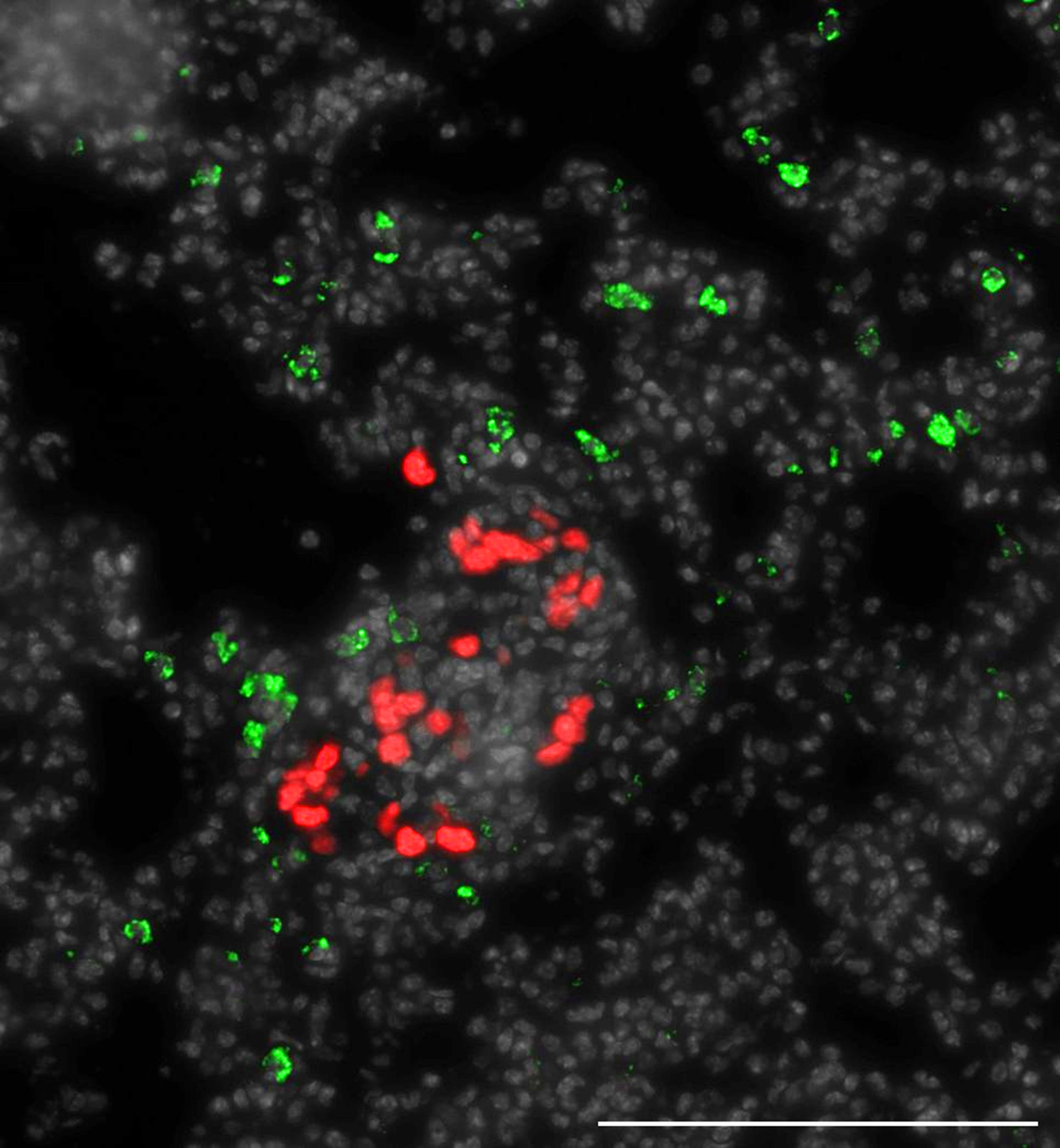



Researchers led by Ludwig Harvard’s Monica Cassandras, Xavier Sanchez and Judith Agudo reported in a March publication in Nature a potentially new strategy to prevent the metastasis of triple-negative breast cancer (TNBC). The researchers applied JEDI—a model Judith developed to study the immune system’s surveillance of cancer stem cells—to locate TNBC cells that evade immune attack and metastasize successfully in mice. They found that many disseminated tumor cells (DTCs) activate the glucocorticoid receptor (GR) to evade targeting by natural killer cells and CD8+ T cells. GR activation suppresses the FAS-FAS ligand pathway, which the researchers show is a key pan-cytotoxic pathway against DTCs. The findings are in line with recent reports suggesting that activation of the glucocorticoid receptor correlates with metastasis and poor outcomes for TNBC patients. Judith, Monica, Xavier and their colleagues showed that mifepristone, a GR inhibitor already in clinical use worldwide, reduced the number of incipient metastases and extended survival in TNBC mouse models. Combining it with anti-PD-1 checkpoint blockade immunotherapy further inhibited TNBC metastasis and extended survival. The researchers note that they have identified a novel mechanism of immune evasion employed by DTCs, underscoring how differently such traveling cells interact with the immune system. They also suggest the GR signaling pathway may be a target for therapies that curtail cancer metastasis, the leading cause of cancer-related mortality.
A Glucocorticoid-Fas axis controls immune evasion during metastatic seeding
Nature, 2026 March 4